
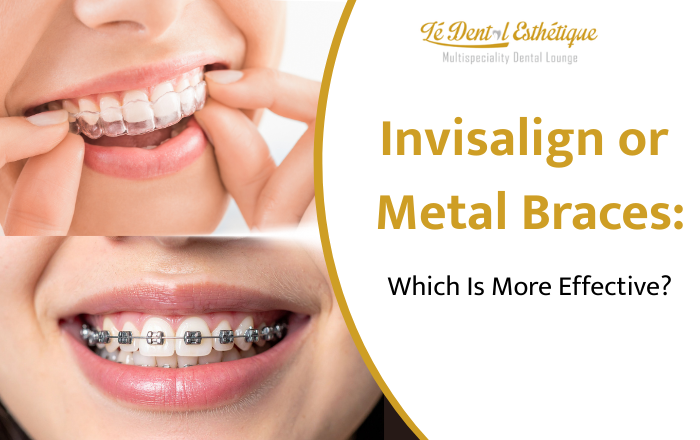
When it comes to achieving a beautiful, healthy smile, modern orthodontics offers multiple solutions. Two of the most popular options are Invisalign and traditional braces. But which is more effective? The answer isn’t as straightforward as you might think—it depends on your dental needs, lifestyle, and treatment goals. In this article, we break down the differences, benefits, and limitations of each option to help you make an informed decision.
Understanding the Basics: Braces vs. Invisalign
Traditional braces have been around for decades and are widely recognized for their effectiveness. They consist of metal brackets attached to the teeth, connected by wires and sometimes elastic bands, which gradually move teeth into the desired position. Braces are suitable for correcting a wide range of dental issues, from minor misalignments to severe bite problems.
Invisalign, on the other hand, is a newer technology that uses clear, removable aligners custom-made to fit your teeth. Patients receive a series of aligners that they swap out approximately every one to two weeks, gradually shifting teeth into place. Invisalign is known for being discreet, convenient, and comfortable, making it a popular choice among teens and adults who prefer a less noticeable orthodontic option.
Effectiveness in Treating Dental Issues
When evaluating effectiveness, it’s important to consider the type and severity of the dental problem.
Mild to moderate misalignments: Invisalign is highly effective for correcting minor crowding, spacing, and some bite issues. Many patients achieve excellent results in a shorter treatment time compared to traditional braces.
Complex cases: Braces remain the gold standard for severe dental problems, such as significant bite irregularities, rotated teeth, or cases requiring extensive tooth movement. Orthodontists can make precise adjustments with braces that are more challenging to achieve with Invisalign alone.
In short, Invisalign can be just as effective as braces for many patients, but braces may be necessary for more complex treatments.
Appearance and Lifestyle Considerations
A significant advantage of Invisalign is its aesthetic appeal. The clear aligners are nearly invisible, which can boost confidence, especially for adults in professional settings. Additionally, Invisalign aligners are removable, allowing patients to eat, brush, and floss without restriction—something that traditional braces do not permit.
Braces, while highly effective, are more noticeable and may come with dietary restrictions to avoid damaging the brackets or wires. For people who want a more flexible and discreet treatment, Invisalign often wins in terms of lifestyle compatibility.
Comfort and Oral Hygiene
Braces can sometimes cause discomfort, especially after adjustments, and may irritate the inside of the mouth. Maintaining oral hygiene with braces can also be challenging, as food particles can get trapped around the brackets and wires, increasing the risk of cavities or gum problems if not properly cleaned.
Invisalign aligners, made from smooth plastic, typically cause less irritation and are easy to remove for brushing and flossing. However, since they are removable, they require a high level of patient compliance—failure to wear them for the recommended 20–22 hours per day can delay results.
Treatment Duration
Treatment time can vary widely depending on the severity of the dental issue. On average:
Braces: Treatment usually lasts between 18 months to 3 years.
Invisalign: Mild to moderate cases can often be completed in 12–18 months, but complex cases may take longer.
It’s important to note that individual results can vary, and an orthodontist will provide the most accurate estimate based on your unique situation.
Cost Comparison
Cost is another factor to consider. Traditionally, braces have been slightly less expensive than Invisalign, but the price difference is narrowing as technology advances. Factors influencing cost include treatment length, complexity, and geographic location. While Invisalign may carry a higher upfront cost, its convenience and reduced need for frequent office visits can make it worthwhile for some patients.
Who Is the Ideal Candidate?
Braces are ideal for patients with complex dental issues, including:
Severe overcrowding
Significant overbites or underbites
Rotated or misaligned teeth requiring precise control
Invisalign is a good option for patients who:
Have mild to moderate dental misalignment
Want a discreet treatment
Can commit to wearing aligners consistently
Prefer minimal interference with their daily routine
A consultation with a licensed orthodontist is crucial to determine which treatment aligns best with your needs.
FAQs
1. How long does Invisalign take?
Typically 12–18 months, while braces may take 18 months to 3 years, depending on complexity.
2. Can Invisalign treat severe cases?
Mild to moderate misalignments are ideal for Invisalign; braces are better for severe dental issues.
3. Are Invisalign aligners comfortable?
Yes, they are smooth, removable, and cause less irritation than metal braces.
4. How do I start treatment with Dr. Charvee Devjee?
Book a consultation at Le Dental Esthetique in Yerawada for a personalized orthodontic plan.
Conclusion:
Both Invisalign and braces are highly effective orthodontic treatments, but the best option depends on your specific dental needs and lifestyle. Braces provide precise control and are ideal for complex cases, while Invisalign offers a discreet, comfortable, and convenient solution for mild to moderate misalignments.
For the most reliable guidance and a personalized treatment plan, trust Dr. Charvee Devjee at Le Dental Esthetique in Yerawada. With expert orthodontic care and modern techniques, you can achieve a healthy, confident smile that lasts a lifetime.
Schedule your consultation today and take the first step toward the smile you’ve always wanted!