
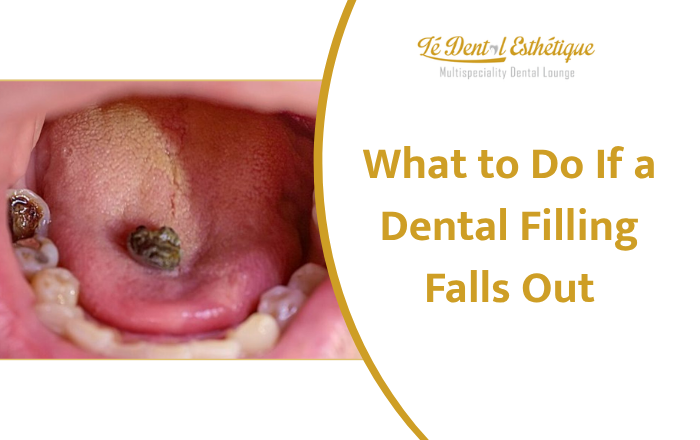
A dental filling can sometimes become loose or fall out while eating, brushing, or even without an obvious reason. If your filling falls out, do not try to fix it permanently at home. Rinse your mouth gently, keep the area clean, avoid chewing on that side, and arrange a dental appointment as soon as possible. A dentist can examine the tooth and determine whether the filling can be replaced or if additional treatment is needed.
A lost filling may expose the inner part of the tooth, making it more sensitive and vulnerable to further damage. Even if you do not have pain, it is better not to ignore it.
What Should You Do Immediately If Your Dental Filling Falls Out?
The first few steps can help protect the tooth until you see a dentist.
1. Rinse Your Mouth Gently
Use lukewarm water to rinse your mouth and remove any food particles around the affected tooth. Avoid vigorous rinsing if the area is painful or sensitive.
2. Check the Filling
If you can find the filling, keep it and take it with you to the dental appointment. The dentist may be able to identify what type of filling was used, although it may not necessarily be reusable.
3. Keep the Tooth Clean
Continue brushing your teeth gently, including around the affected area. Good oral hygiene helps reduce the buildup of plaque and food around the exposed tooth.
4. Avoid Chewing on That Side
Until the tooth is examined, try to chew on the opposite side of your mouth. This reduces pressure on the tooth and may help prevent further damage.
5. Arrange a Dental Examination
Contact a dentist and explain that your filling has fallen out. The dentist will examine the tooth and decide what treatment is appropriate.
Is a Lost Dental Filling a Dental Emergency?
A filling falling out is not always a dental emergency, especially if there is no significant pain, swelling, bleeding, or other concerning symptoms. However, it should still be assessed by a dentist rather than left untreated for a long time.
Seek urgent dental attention if you experience:
- Severe or worsening tooth pain
- Facial or gum swelling
- Pus or a bad taste in the mouth
- Persistent bleeding
- Fever along with dental pain or swelling
- Difficulty swallowing or breathing
- A broken or badly damaged tooth
These symptoms may indicate infection or more extensive damage that requires prompt evaluation.
What Should You Avoid After a Filling Falls Out?
Until you can see your dentist, take some simple precautions.
Avoid:
- Chewing hard or sticky foods on the affected side
- Very hot or very cold foods if the tooth is sensitive
- Sugary foods that may irritate the exposed area
- Picking at the tooth with a sharp object
- Trying to glue the filling back into place
- Using household adhesives or other non dental materials
- Delaying treatment simply because the tooth does not hurt
A tooth can sometimes have significant damage without causing immediate pain, so the absence of symptoms does not always mean that the tooth is fine.
Can You Temporarily Protect the Tooth at Home?
You can take temporary measures to protect the tooth, but these should not be considered a permanent solution.
Keep the tooth clean and avoid chewing directly on it. If the tooth has a sharp edge that is irritating your tongue or cheek, a temporary dental filling material available from a pharmacy may sometimes be used according to its instructions until you receive professional care.
However, do not attempt to permanently repair the tooth yourself. Temporary materials can fall out and do not address problems such as decay, cracks, or damage beneath the previous filling.
If you are experiencing significant sensitivity or pain, speak with a dentist about appropriate treatment rather than relying on home remedies.
When Should You See a Dentist?
Ideally, make a dental appointment as soon as reasonably possible after a filling falls out.
The sooner the tooth is examined, the easier it may be to identify why the filling was lost and determine what needs to be done.
A dentist may check for:
- New or remaining tooth decay
- A crack or fracture in the tooth
- Damage around the old filling
- Signs of infection
- Weakening of the remaining tooth structure
- Problems with the bite
The dentist may also take an X-ray if necessary to assess areas that cannot be seen during a routine examination.
What Treatment May Be Needed After a Filling Falls Out?
The treatment depends on the condition of the tooth.
The Filling May Be Replaced
If the tooth is otherwise healthy and there is enough strong tooth structure, the dentist may remove any damaged material and place a new filling.
A Different Restoration May Be Recommended
If a large portion of the tooth has been affected or the remaining tooth structure is weak, a dentist may recommend another type of restoration, such as an inlay, onlay, or dental crown.
Root Canal Treatment May Be Needed
If decay or damage has reached the tooth’s pulp and caused significant inflammation or infection, root canal treatment may be considered.
The appropriate treatment cannot be determined simply by looking at the lost filling. A dental examination is needed to understand the condition of the tooth.
What Happens If You Leave a Lost Filling Untreated?
It may be tempting to ignore a lost filling if the tooth feels normal. However, the exposed tooth can be more vulnerable to food accumulation, sensitivity, decay, and further damage.
Depending on the reason the filling came out, delaying treatment may allow an underlying problem to progress. A weakened or cracked tooth may also become more difficult to restore if additional damage occurs.
This does not mean every lost filling will lead to serious complications. The important point is that a dentist should evaluate the tooth before deciding whether it can safely be left alone.
Why Do Dental Fillings Fall Out?
A filling can become loose or fall out for several reasons. These may include:
- Normal wear over time
- Repeated pressure from chewing
- New decay around the filling
- A crack in the tooth
- Damage to the filling or surrounding tooth
- Changes in the tooth structure
Sometimes the filling comes out because the tooth underneath has developed a problem. This is why simply replacing the filling without checking the tooth may not always be the right approach.
Get a Lost Filling Checked Promptly
A lost dental filling is something that should be taken seriously, even when there is little or no pain. Keeping the area clean, avoiding pressure on the tooth, and arranging a dental examination can help prevent further problems.
Get Your Tooth Examined
For patients in Yerawada and nearby areas of Pune, Lè Dental Esthètique – Dental Clinic, led by Dr. Charvee Devjee, offers dental care with 15+ years of experience.
Address: Unit Number 11, 1st Floor, Nyati Unitree, West Building, Opposite Gunjan Theatre, Nagar Road, Yerawada, Near Kalyani Nagar, Pune, Maharashtra 411006
Phone: 94057 62667
WhatsApp: Click here to chat on WhatsApp:
If your filling has fallen out or you are experiencing ongoing dental discomfort, consult a qualified dentist for an examination and appropriate treatment.